How to Prevent Termites: Protecting Your Home From Termite Damage
Termites need three things from your house: soil next to wood, moisture, and a hidden way in. Take those away and most of the risk goes with them, usually for the price of a few weekends.
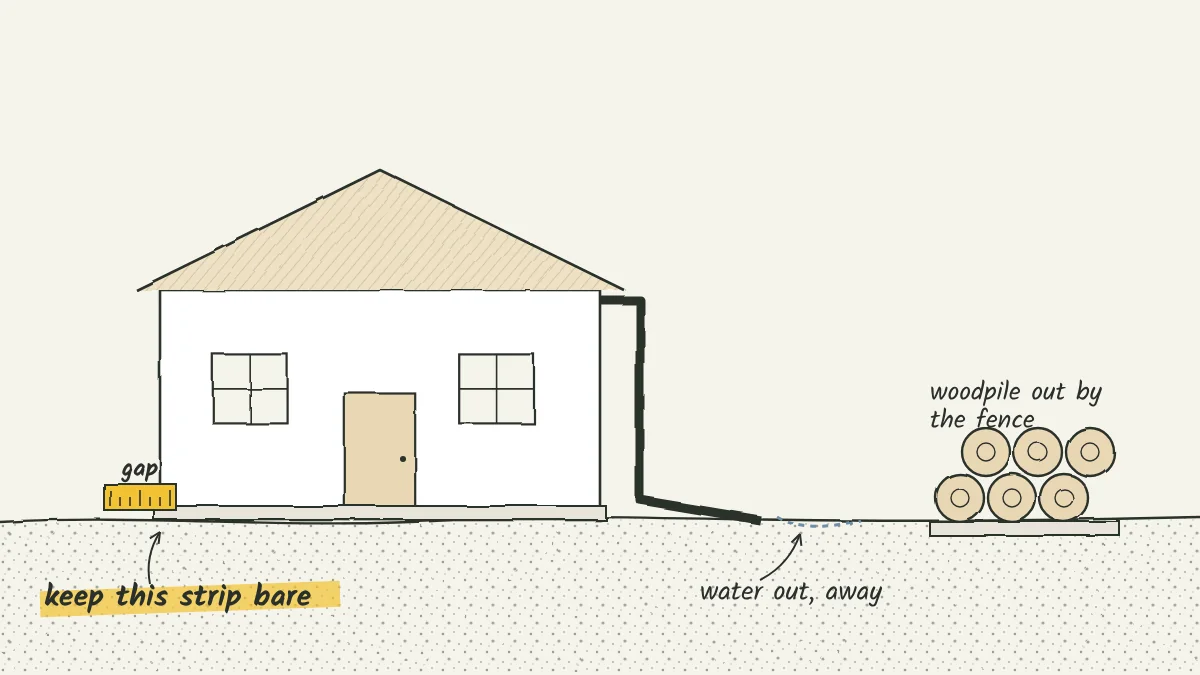
The short version
To prevent termites, break the link between soil, moisture and wood. Keep wood siding and framing several inches above the soil, slope the ground and downspouts away from the foundation, fix leaks, dry out crawlspaces, keep firewood and lumber away from the house, and get a professional inspection on a regular schedule. In high-risk areas, add a preventive treatment.
On this page
Why prevention works
Subterranean termites, the kind that cause most damage in the U.S., live in the soil and dry out quickly in open air. To reach your house they need wood that touches soil, or a protected path from the soil to the wood: a crack, a mud tube, a hollow block wall, a pile of mulch against the siding.
They also need moisture. Texas A&M AgriLife Extension says the termites themselves are usually found in the top 4 to 6 inches of soil, and leaks, poor drainage and damp crawlspaces all keep that zone inviting.
So prevention comes down to three habits:
- Separate wood from soil. Leave a visible gap between the ground and anything made of wood.
- Keep the foundation dry. Water goes away from the house, not toward it.
- Leave termites nowhere to hide. A bare strip of foundation lets you, and an inspector, spot mud tubes early.
None of this makes a house termite-proof. It makes it a lot harder to eat, and a lot easier to catch early.
The clearance numbers
These are the distances that matter most. The building code numbers come from the International Residential Code, which most states and cities adopt in some form. Your local code may differ, so treat these as the usual minimums.
| What | Minimum gap | Where it comes from |
|---|---|---|
| Wood siding, sheathing and wall framing | 6 inches above the ground | IRC R317.1 |
| Same, above a concrete patio, porch slab or steps | 2 inches | IRC R317.1 |
| Wood framing resting on a foundation wall | 8 inches above exposed ground, or use treated wood | IRC R317.1 |
| Floor joists in a crawlspace | 18 inches above the soil, or use treated wood | IRC R317.1 |
| Girders (beams) in a crawlspace | 12 inches above the soil, or use treated wood | IRC R317.1 |
| Soil line below the top of the foundation | 6 to 8 inches | Texas A&M AgriLife Extension |
| Substructure wood under a building, ideally | 12 inches above the soil | University of California IPM |
If your siding is buried in soil or mulch today, pulling the soil back is the single cheapest termite fix there is.
Keep the foundation dry
Water near the foundation is the thing I'd fix first. It softens wood, keeps soil damp for termites, and on clay soils it can crack the foundation itself.
- Gutters and downspouts. Clean them, and extend downspouts so water lands several feet from the wall. The U.S. EPA lists gutter and downspout upkeep among its basic termite prevention steps.
- Grade the soil away from the house. Fairfax County's guide for homeowners on clay soils calls for a slope of at least 5 percent, about six inches of drop over ten feet.
- Fix leaks fast. Texas A&M lists plumbing leaks, roof leaks, gutters and air conditioner condensate lines as the moisture sources to fix. The AC drip line is the one everyone forgets.
- Don't water the wall. Aim sprinklers away from the foundation and don't leave hoses running.
- Watch for "water damage" with no leak. Bubbling paint and soft spots near the floor can be termites carrying moisture. See termite damage vs water damage.
Dry out the crawlspace
If your house sits over a crawlspace, that's where the damp wood is. Texas A&M AgriLife recommends covering at least 70 percent of the crawlspace soil with a 6-mil polyethylene sheet and providing about 1 square foot of vent opening for every 150 square feet of crawlspace. A dehumidifier helps in sealed or very humid crawlspaces.
Keep vents clear of plants and mulch, which the EPA specifically warns about. And take a flashlight down there once a year: crawlspaces are where mud tubes go unnoticed for years. Our crawlspace moisture guide goes deeper.
Prevention kit
As an Amazon Associate I earn from qualifying purchases.
-
View on Amazon
Pin-type wood moisture meter
Wood that reads above about 20% is wet enough to invite rot and termites. Great for sills and subfloors.
-
View on Amazon
Crawlspace or basement dehumidifier
Dry wood is the cheapest termite protection there is. Aim for wood readings under 15%.
-
View on Amazon
Bright LED flashlight, 1,000+ lumens
The one tool that really matters. A tight, bright beam shows mud tube texture and wing piles in dark corners.
Wood around the yard
Do
- Stack firewood well away from the house and off the ground. The EPA says not to store firewood or wood debris next to the house. More in firewood and termites.
- Set fence posts, trellises and deck stairs on concrete or masonry blocks, as Texas A&M suggests.
- Pull out old stumps, buried scrap lumber and form boards near the house.
- Use pressure-treated or naturally resistant lumber for anything touching soil. See termite-resistant wood.
Don't
- Don't store lumber, boxes or cardboard against the foundation or in the crawlspace.
- Don't build raised beds or planters against the wall, especially with wood edging.
- Don't let wood siding or door frames run down into the soil.
- Don't bury wood scraps when backfilling around a new addition.
Mulch, plants and stucco
Mulch holds moisture and gives termites cover. It doesn't attract them the way people fear, but it does make the foundation harder to inspect. Keep it thin and pulled back from the wall, and see does wood chip mulch attract termites for the full answer.
The EPA advises against planting trees and shrubs too close to the house or letting them grow against exposed wood. Shrubs that hug the wall hide mud tubes and keep the soil damp. A foot or two of space also makes painting easier, so you win twice. Our landscaping guide has spacing ideas.
One more hidden path: siding systems that run below the soil line. The University of California's IPM program warns that stucco reaching the ground can let termites travel unseen between the stucco and the foundation. Rigid foam insulation below grade does the same. If your wall covering touches the dirt, ask an inspector to look at it.
Seal the small gaps
The EPA recommends sealing cracks in concrete foundations and the gaps where pipes and wires pass through walls, using cement, grout or caulk.
Be realistic about this one. Termites are small enough to use cracks you'd barely notice, and you'll never find every crack in a slab. Sealing is worth doing because it closes the easy doors and keeps water out. It doesn't replace the rest of this list. Can termites go through the concrete itself? No, but they're experts at going around it. See can termites go through concrete.
Building or remodeling? Do it now
The cheapest moment to protect a house is before the concrete goes in. Texas A&M AgriLife calls a full-rate liquid termiticide treatment of the soil before the slab is poured the best time to protect the soil under a structure, because nobody can easily reach it afterward. See termite pretreatment for new construction.
The EPA lists other construction options too: borate sprays on framing, building materials made with termiticide, and physical barriers like stainless steel mesh or specially sized sand. Our guides to physical termite barriers and building code termite requirements explain what your builder must do and what's optional.
Adding a room, a patio or a porch? Remember that new concrete and new fill can cut straight through an existing treatment. Tell your termite company before the work starts.
Do it yourself, or pay for it?
Most prevention is free or cheap. A preventive treatment is a different decision, and it depends on where you live.
| Step | Who | Rough effort |
|---|---|---|
| Pull soil and mulch back from siding | You | An afternoon with a shovel |
| Extend downspouts, fix grading | You | A weekend, a few extension pieces |
| Fix leaks and AC drip lines | You or a plumber | Varies |
| Crawlspace vapor barrier and vents | You or a contractor | A day or two |
| Move firewood, stumps, lumber | You | A Saturday |
| Yearly look around the foundation | You | An hour, see how to inspect for termites |
| Professional inspection | Licensed inspector | Every year or two in high-risk areas |
| Preventive soil treatment or bait system | Licensed applicator | One visit plus yearly renewals |
Texas A&M AgriLife estimates that an unprotected home in Texas has about a 70 percent chance of termite damage within 25 years. Where termite pressure is that high, a preventive treatment is a reasonable buy. Where it's light, the free steps above plus inspections are usually enough. Check your termite risk zone.
Inspections are prevention too
Nothing on this list makes a house immune. Prevention lowers the odds; inspections catch the colony that beats the odds before it does real damage.
Walk the foundation yourself every spring, ideally around swarm season. Then have a licensed professional look on a schedule that fits your risk. UC IPM suggests regular inspections every three to five years in its region. In the Southeast and along the Gulf, I'd go every year. Our guide on how often to get a termite inspection lays it out by zone, and the prevention checklist puts all of this on one printable page.
Questions people ask
What is the best way to prevent termites?
Remove wood-to-soil contact and moisture around the foundation. Keep siding several inches above the soil, send gutter water away from the house, fix leaks, keep firewood and lumber away from the walls, and get regular professional inspections. In high-risk areas, add a preventive treatment.
Is there anything that keeps termites away naturally?
Dry soil, open space and good drainage do more than any spray. Naturally resistant lumber helps for decks and fences (see termite-resistant wood), and the EPA says beneficial nematodes have shown some success, mostly in lab settings. Nothing natural replaces inspections.
How far should mulch be from the house?
Keep mulch pulled back from the foundation so a strip of bare foundation stays visible, and keep it below the siding and weep holes. A visible strip of bare foundation also makes mud tubes easy to spot. The details are in does wood chip mulch attract termites.
Should I get a preventive termite treatment?
In very heavy and moderate-to-heavy termite zones, like the Gulf Coast, the Southeast and much of Texas, a preventive treatment is a reasonable choice. In light-pressure areas, prevention habits and periodic inspections are usually enough. Get two or three quotes either way.
Do termites come back after treatment?
They can, especially when soil around the house gets disturbed or moisture problems return. Prevention habits help a treatment last its full life. See do termites come back after treatment for the details.
Keep reading
Termites in your state
Sources
- U.S. EPA: Termites, how to identify and control them
- Texas A&M AgriLife Extension: Subterranean termites (E-368)
- University of California IPM: Pest Notes, Termites
- International Residential Code R317.1, as quoted by the Florida Building Commission
- Fairfax County Land Development Services: Homeowner's guide to marine clay