Does Wood Chip Mulch Attract Termites?
University researchers have actually tested this, and the answer surprises people. Mulch isn't termite bait. But a mulch bed in the wrong place can still be the reason they get into your house.
The short version
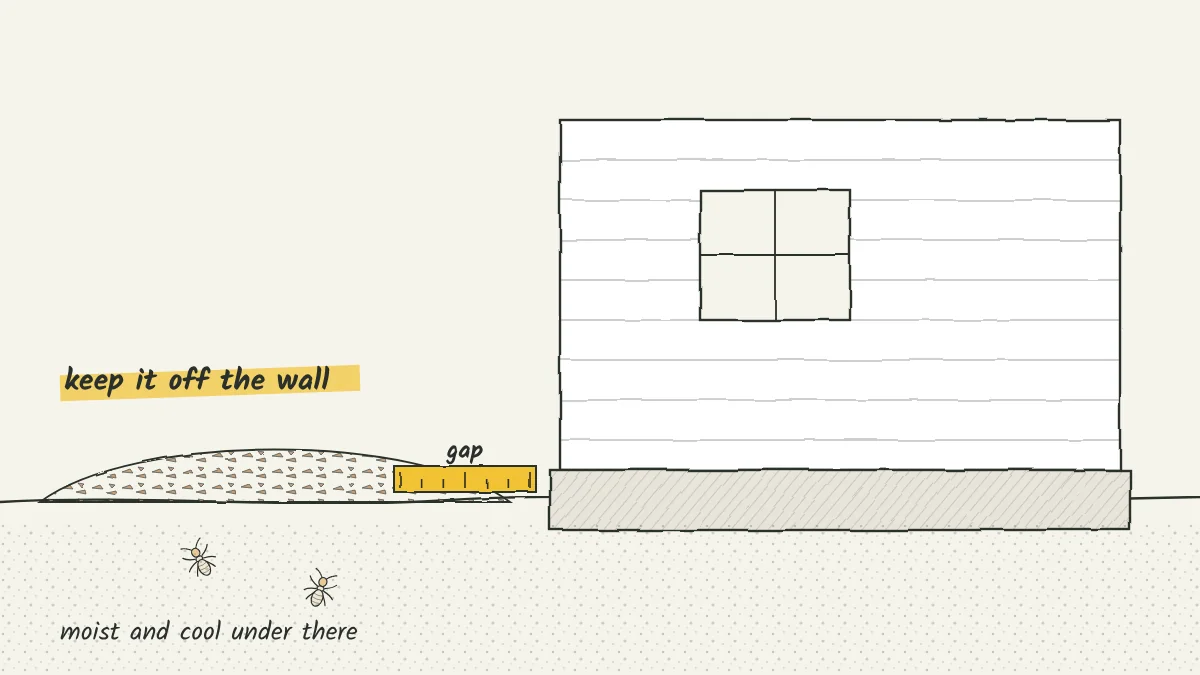
Wood mulch doesn't pull termites in from far away, and in lab tests termites did poorly living on common mulches. But mulch keeps soil moist and cool, hides termite activity, and mulch piled against the foundation can bridge treated soil. Keep beds thin and pulled back a few inches from the house.
On this page
What the research actually found
This question has been tested, which is more than you can say for most termite advice.
University of Maryland. Researchers in the Structural IPM program tested termites on eucalyptus, hardwood and pine bark mulch in the lab, and on those mulches plus pea gravel and bare soil in the field. In the lab, termites fed on the mulches survived noticeably worse than termites fed birch wood. In the field, termites turned up under all of them at similar rates, gravel and bare soil included, and activity actually lasted longer under the gravel. The researchers found no evidence that moist mulch draws termites in from the surrounding area. Termites that wander into a good spot just tend to stay.
University of Florida. Researchers gave subterranean termites six commercial and local mulches. Termites ate all of them, some more than others. Melaleuca mulch was eaten the least. Cypress heartwood wasn't touched, but cypress sapwood was, and most cypress mulch sold today comes from young trees that are mostly sapwood.
Put together: mulch is not termite bait, but it isn't a termite repellent either. Termites will happily live and forage under it, the same as under gravel or bare soil, especially when it's damp.
Common mulches and termites
| Mulch | Do termites eat it? | Takeaway |
|---|---|---|
| Pine bark, hardwood | Some, but they survived poorly on it in lab tests | Fine in beds, keep it off the foundation |
| Cypress | Sapwood yes, heartwood no; bagged cypress is mostly sapwood | Don't count on it as a barrier |
| Melaleuca | Eaten least in the Florida tests | A reasonable pick in Florida, still keep it back from the wall |
| Rubber mulch | No, it isn't wood | Doesn't feed them, still holds moisture underneath |
| Gravel and stone | No | Termites were found under it too, and stayed longer |
| Bare soil | No | Least cover, least comfortable for them, least pretty |
No mulch, wood or stone, keeps termites away. Placement matters far more than material.
So why do termite inspectors hate mulch beds?
Because of where people put them. Three problems, none of which is "termites love wood chips":
Moisture. Mulch is designed to keep soil damp and cool. That's great for your shrubs, and it's also exactly the kind of soil subterranean termites like to travel through.
Cover. Mud tubes on a foundation are the main early warning you get. A deep mulch bed piled against the wall hides the bottom of the foundation where those tubes start. You can't catch what you can't see.
Bridges. If your house has a liquid termite treatment, it's a band of treated soil along the foundation. Pile mulch or fresh soil on top of it, and termites can travel through the untreated layer above it, straight to the wall. Mulch that covers siding, weep holes or the sill gives them a hidden ramp into the house.
For checking under the mulch
As an Amazon Associate I earn from qualifying purchases.
-
View on Amazon
Pin-type wood moisture meter
Wood that reads above about 20% is wet enough to invite rot and termites. Great for sills and subfloors.
-
View on Amazon
Bright LED flashlight, 1,000+ lumens
The one tool that really matters. A tight, bright beam shows mud tube texture and wing piles in dark corners.
How to mulch near a house without inviting termites
-
Pull it back from the foundation
Leave a strip of bare soil or gravel a few inches wide between the bed and the wall. That keeps the foundation dry, keeps it visible, and keeps the treated soil uncovered.
-
Keep the layer thin
Two to three inches is the usual gardening advice, and it's plenty for weeds and moisture. Deeper beds stay wet and hide more.
-
Never cover siding, weep holes or sills
Wood siding should sit well above the soil. Under most building codes, untreated wood siding needs a clearance of 6 inches or more from the ground.
-
Don't build up the grade
Every spring's new layer raises the bed a little. Rake the old mulch out instead of piling new on top.
-
Look under it once a year
In spring, rake the mulch back from the foundation and look for mud tubes. It takes ten minutes. A quick DIY inspection covers the rest of the house.
Mulch near the house
Do
- Leave a visible strip of foundation between the mulch and the wall
- Rake out old mulch before adding new
- Point downspouts away from mulch beds
- Check under the mulch every spring
Don't
- Pile mulch against siding, weep holes or the sill
- Bury landscape timbers or stumps next to the house
- Spread fresh soil over the treated zone after a termite treatment
- Assume cedar or cypress mulch will keep termites away
What about the wood around the mulch?
If you're worried about termites in the yard, mulch is the small stuff. The bigger targets are wood that touches the soil: old stumps, buried construction scraps, landscape timbers, fence posts screwed to the house, and firewood stacked against a wall. Researchers at the University of Florida pointed to leftover construction wood as a common termite food source near houses.
Clear that out first. Then worry about the mulch. The full list is in how to prevent termites and landscaping that keeps termites away.
Questions people ask
Does mulch attract termites to your house?
Not in the sense of luring them from far away. University of Maryland researchers found no evidence of that. But mulch keeps the soil moist and hides activity, so termites already nearby are comfortable under it. Keep it pulled back from the foundation.
What is the best mulch to avoid termites?
No mulch keeps termites away. In Florida tests melaleuca was eaten the least, and rubber or stone isn't food at all, but termites were found under gravel too. How far the mulch sits from the house matters more than the type.
How far should mulch be from the house foundation?
Leave at least a few inches of bare soil or gravel between the mulch and the wall, so the foundation stays dry and visible. Never let mulch touch siding, weep holes or windowsills.
Does cedar mulch repel termites?
Don't count on it. Cedar heartwood resists termites, but bagged mulch is a mix of wood, and termites in the Florida study ate cypress sapwood readily. Treat cedar mulch like any other mulch: thin, and away from the wall.
Should I remove all the mulch around my house?
Usually not. A thin bed a few inches away from the foundation is fine for most homes. If you already have termites, or a treatment was just applied, ask your termite company before adding new mulch near the house.